

Daily routine
Where Supplements Fit in a Healthy Routine
A capsule is a small piece of a larger picture. Food, movement, and sleep carry most of the weight, and healthy lifestyle products work best as a filler for gaps rather than a replacement for habits. This page shows how the pieces usually fit together.
Orientation
Four pieces carry the routine, and the capsule is the smallest one
Most men who start taking supplements ask which bottle to pick first. The more useful question is what the bottle is meant to sit next to. When food, movement, and sleep are already in place, a daily nutrient blend has a clear job. When they are not, the same blend becomes a substitute for something that habits should be doing.
SehatPria is an editorial resource, not a shop. We compare natural supplements for men by ingredient list, dosage shown on the panel, format, and age range. Nothing here replaces a conversation with a qualified professional about your own diet and health history.
Food is the base, not a detail
Varied meals deliver most vitamins and minerals for men without any capsule. Supplements make sense once a specific gap is identified.
Movement
Repeatable sessions beat ambitious plans.
Sleep
The base layer most energy complaints trace to.
Supplement
A filler for a gap, taken on a schedule you keep.
Food, movement, and sleep carry most of the weight. A daily nutrient blend only helps once you know which gap you are filling.
Start with the plate
Start With Food, Not the Bottle
If your meals are varied, most nutrients arrive on the plate. Supplements become useful when a specific gap exists: low sun exposure, a restricted diet, high training volume. Identifying the gap first is what separates a sensible routine from an expensive one.
That sounds obvious, but it changes what you buy. A man who eats meat and legumes several times a week is unlikely to gain much from a zinc capsule. A man who trains hard four days a week and sweats heavily may be better served by an electrolyte mix than by another multivitamin. The gap, not the shelf, decides the purchase.
- Write down what you eat in an average week before you buy anything.
- Look for the nutrient that appears least often on that list.
- Only then check whether a formula covers it without duplicating the rest.


Movement
Movement You Will Actually Repeat
Three short sessions a week you keep doing beats a five-day plan you abandon in February. Supplements marketed for energy and endurance assume you are training; if you are not, the energy blend is solving a problem you do not have yet.
Sessions do not need equipment or a long commute. Twenty minutes of brisk walking, a short resistance routine with your own body weight, or a weekly swim all count. Once the sessions are regular, the question of what to take for energy and endurance becomes answerable, because you finally have something to measure it against.
Before you add an energy product
Count your real training days over the last month, not the plan on your phone. One to two sessions a week is a starting point, not a training load. Talk to a qualified professional if you are unsure what applies to you.
What a training routine changes
Higher volume raises the demand for fluid, sodium, and magnesium. That is a narrower, more honest reason to look at a specific formula instead of a general blend.
Sleep
Sleep as the Base Layer
Most energy complaints trace back to sleep more often than to nutrients. Fixing the sleep schedule is unglamorous and free. A supplement can support a routine around that, but it will not compensate for six hours a night on a regular basis.
Consistent bedtime
Same hour each night, weekends included, does more than most blends.
Quiet, dark room
Blackout curtains and a fan handle the two things Jakarta nights make hard.
Last coffee earlier
Move the afternoon cup back two hours for a week before adding anything else.
If the symptoms persist after two or three weeks of better sleep, the next step is not another bottle. Speak with a qualified healthcare professional about your own situation and history.
Sequence
Building a Morning Sequence
Pair the supplement with something you already do: coffee, breakfast, brushing your teeth. A daily nutrient blend taken at the same point every day is far easier to remember than one taken when you think of it.
The habit chain is the whole trick. The bottle is not the routine; the routine is the routine, and the bottle rides along with a step that already happens without willpower.
-
1
Attach it to breakfast
Take it with the first meal so it lands alongside food rather than on an empty stomach. If your breakfast is inconsistent, pick the coffee instead.
-
2
Keep it visible
A bottle in a drawer disappears. A bottle beside the kettle or the toothbrush glass shows up. Position matters more than the label.
-
3
Water first, then the capsule
A full glass of water makes the step easier to remember and matches the hydration point later on this page.
-
4
Same time, same place, every day
Consistency is what makes a two-week log readable. Skipped days should be visible, not hidden.
Food sources
Food Sources Worth Knowing
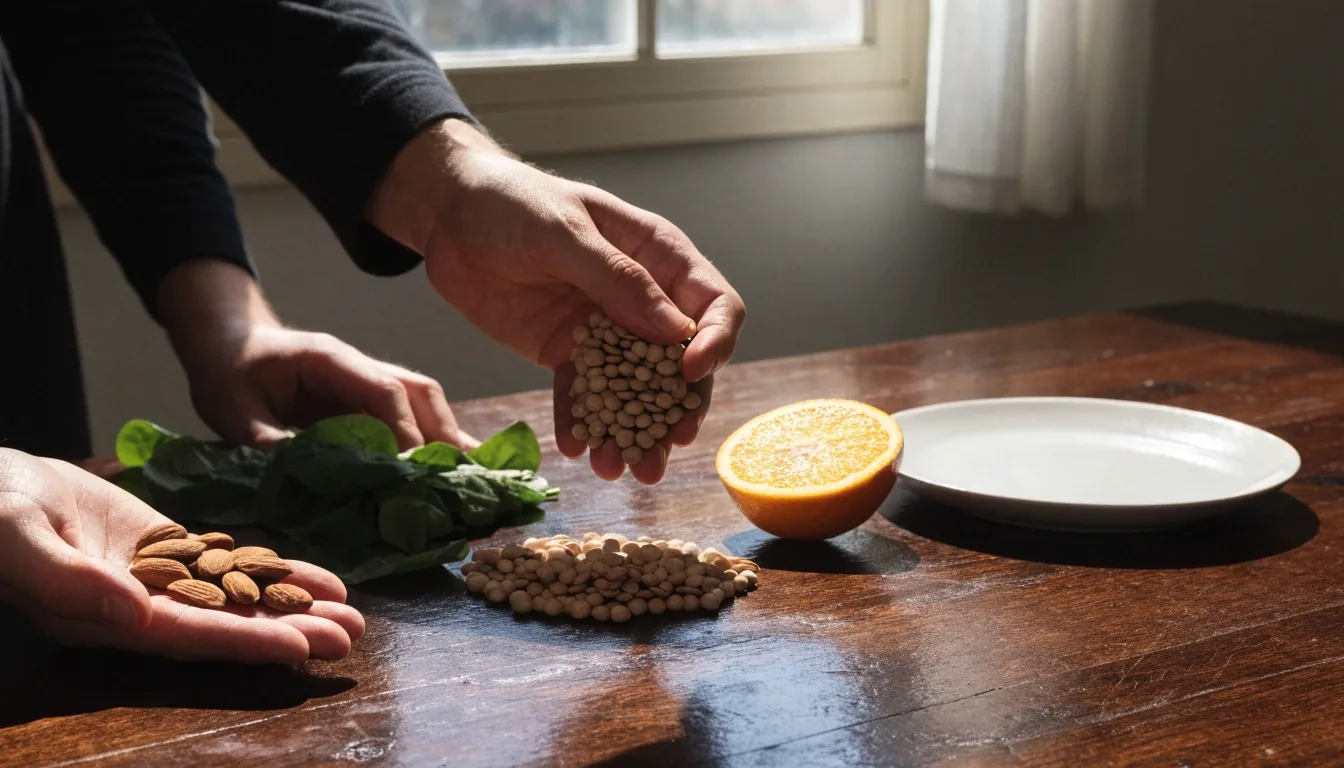
Zinc in meat and legumes, magnesium in leafy greens and nuts, vitamin C in fruit. Knowing the food sources makes it easier to judge whether a formula is filling a real gap or duplicating what you already eat.
Read the panel next to the plate
When a label shows the amount of each nutrient, compare it with what your meals already provide. Duplication is the most common way a shelf fills up with bottles nobody finishes.
Hydration
Hydration and Heat in Jakarta
In Jakarta, hydration is a year-round consideration. Electrolyte mixes and water intake do more for how you feel on a hot day than most capsules. If you train outdoors, this is not a side issue.
A practical shape for the day: a glass of water before the morning coffee, a bottle within reach through the afternoon, and an electrolyte mix during any session longer than an hour in the heat. Kits, bottles, and mixes count as healthy lifestyle products in the same way a blend does, and they earn their place in the routine faster than most people expect.

Clean label
Clean Label in a Daily Context
A short ingredient list is easier to fit into a routine you understand. Clean label products, when the term is used honestly, mean fewer unknowns on the panel. That is a modest benefit, but a real one for daily use.
Ingredient list
A formula with eight named ingredients is easier to check against your meals than one with thirty.
Dosage shown
Amounts on the panel let you compare formulas directly instead of guessing from marketing copy.
Format
Capsule, tablet, softgel, or powder. The one you will actually take daily is the right one.
Age range
Formulas tuned for a younger adult may carry different amounts than those geared to men over fifty.
What you will take
A shorter panel is not a guarantee, but it is easier to keep inside a routine you can explain to yourself.
Keeping track
Keeping a Simple Log
Note what you take and when, for two weeks. Patterns show up fast: the days you forget, the format you avoid, the product that sits untouched. Adjust based on that, not on what a label suggests you should feel.
The log does not need an app. A note on your phone, a line in a paper diary, or a tick on a wall calendar all work. The only rule is that it has to take under ten seconds, or it will not survive the second week.
After two weeks, look for three things: which days you skipped, which format you kept reaching for, and which bottle never opened. Those three answers tell you more about your next purchase than any comparison table can.
When to stop
When to Stop a Supplement
If a product sits unused for a month, or you cannot explain why you are taking it, stop. Supplements are optional by design. Dropping one that does not fit your routine is a normal part of getting the routine right.
Two questions work as a filter. Can you name the gap this product is meant to fill? Can you point to the day you last took it without thinking? If either answer is no, the shelf can lose a bottle without the routine losing anything.
Questions about fitting a routine together
Do I need a supplement if I already eat well?
Not necessarily. If your meals are varied and cover zinc, magnesium, and vitamin C from real food, a broad blend mostly repeats what you already eat. A single gap, like low sun exposure or a restricted diet, is a more useful reason to look for one specific product.
What should I look at first when comparing formulas?
Start with the ingredient amounts, then the format, then the age range the label targets. Marketing copy on the front of the bottle usually restates the same three points less precisely. The comparison page here lays out the same fields side by side.
Is it safe to take more than one product at a time?
It depends on the formulas, because overlapping ingredients add up. Read the panels together rather than one at a time. If you take anything else regularly or you are unsure how amounts combine, ask a qualified healthcare professional about your own situation before adding another product.
Does the time of day I take it matter?
Most daily blends are taken with a meal, largely because food makes the habit easier to keep and some nutrients are better absorbed alongside it. Anchoring it to breakfast or lunch matters more than the exact minute on the clock.
How long should I stick with a new routine before judging it?
Give it the full two weeks of the log before you decide. The useful signal is not what you feel on any single day; it is which days you forgot, which format you avoided, and whether the bottle emptied. That pattern is what the next decision should be built on.

Start with the habit, then choose the bottle
Food, movement, and sleep come first. Once those are steady, compare formulas by what they actually contain and pick the one that fits the sequence you already run. The guide below walks through format, dosage, and age range in order.
SehatPria is an editorial resource based at Jl. Jend. Sudirman No. 52, Senayan, Kebayoran Baru, Jakarta Selatan 12190. Reach the editorial team at [email protected] or +62 21 5291 6656, Monday to Friday, 09:00–18:00. Products mentioned are dietary supplements, not medicines; talk to a qualified healthcare professional about your own needs.